Website created to tell the story of the Municipality of San Valentino

Subscribe to our Newsletter
C.I. SAN VALENTINO IN ABRUZZO CITERIORE
Largo San Nicola
+39 085 922343
info@majambiente.it
Discover all the
HISTORICAL ITINERARIES
OUR GUIDES
SITEMAP
MAJELLA NATIONAL PARK
MAJELLA NATIONAL PARK
Via Badia 28, Sulmona
+39 0864 25701
info@parcomajella.it
Via Badia 28, Sulmona
+39 0864 25701
info@parcomajella.it
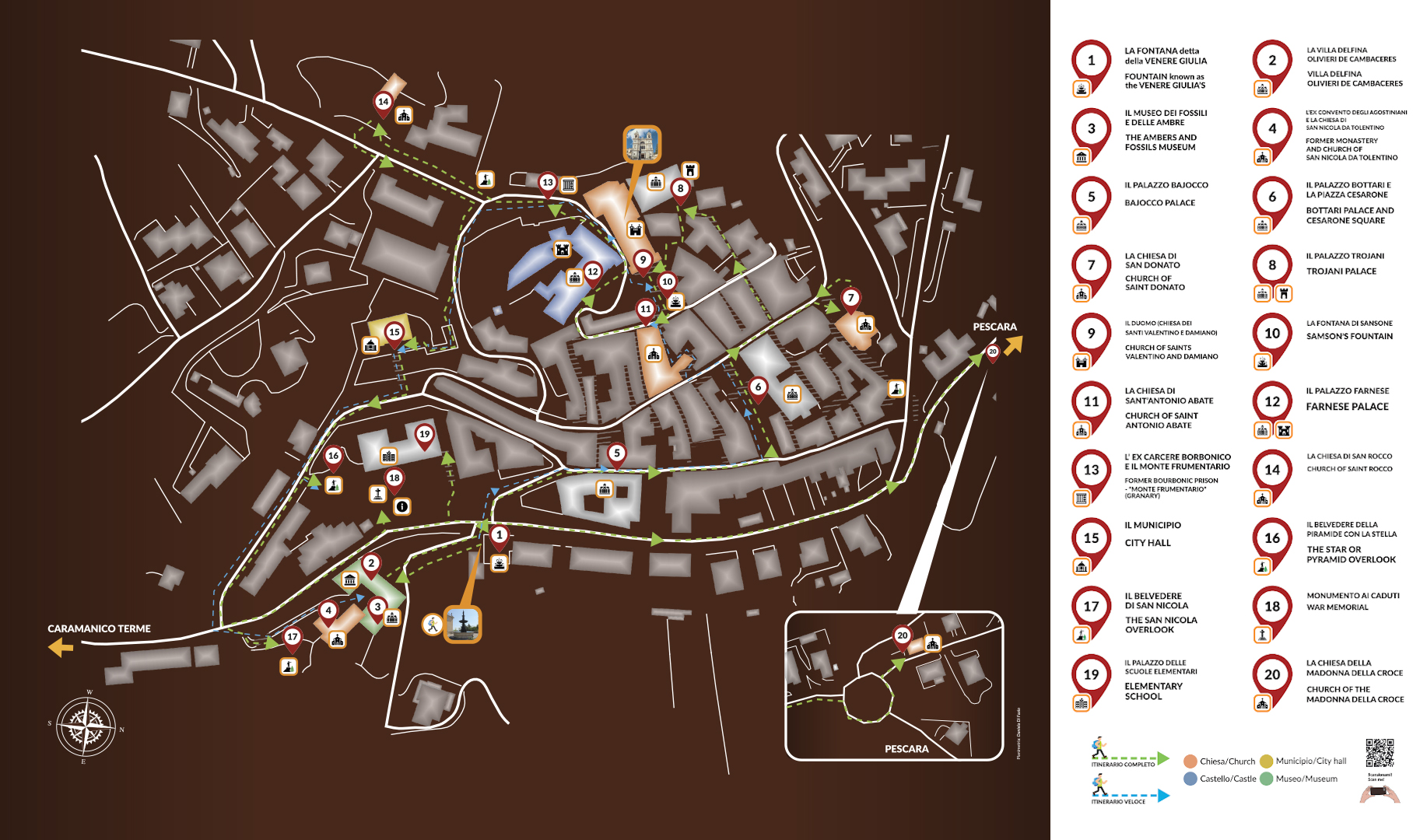
Walk in the History of Saint Valentine
Discover the itineraries among villages, castles, ancient churches, and paths of the past
@ All Right Reserved 2024 - Website created by Flazio Experience
@ All Right Reserved 2024 - Website created by Flazio Experience
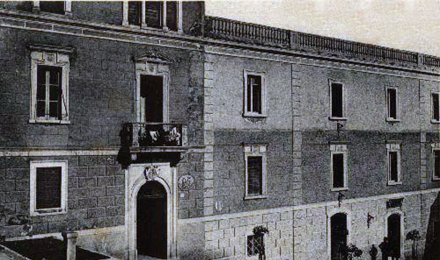
Former Bourbon Prison
Palazzo Farnese
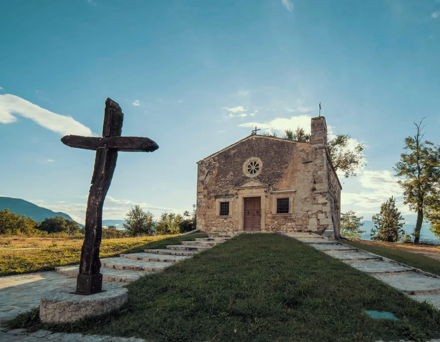
Church of San Rocco
A place rich in civil and social history, among the San Martino fair, brigands, and ancient works of charity dedicated to the poorest.
From the monks of Casauria to the Farnese, a fortified complex that tells centuries of feudal history, nobility, and architectural transformations.
Simple and evocative 16th-century country church, with a Majella stone rose window that illuminates the interior with symbolic light.
Palazzo Troiani
Samson Fountain
Cathedral of San Valentino
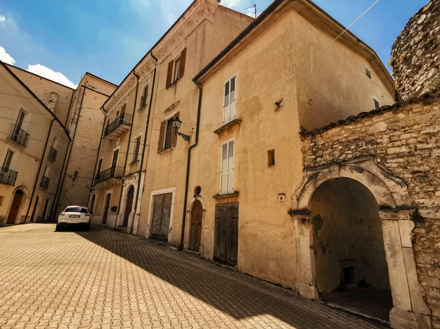
Nineteenth-century noble residence overlooking the remains of the medieval city walls, between family history and the defensive architecture of the village.
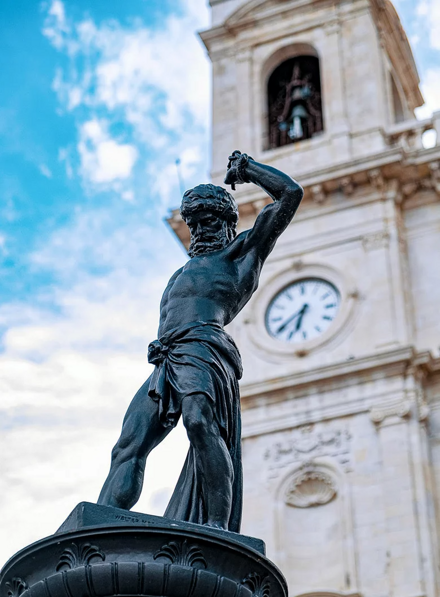
Scenic 19th-century cast iron fountain at the foot of the Cathedral, with ornate basins and the statue of Samson produced by a historic Scottish foundry.
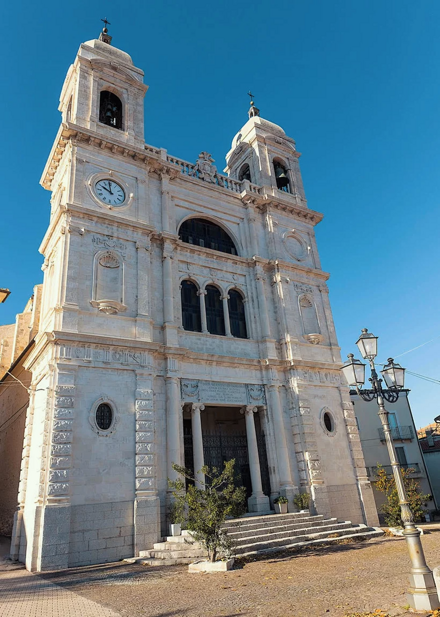
Built in the eighteenth century on the site of the first worship of the Patron Saint, it preserves centuries of faith and memory in the highest heart of the village.
Church of San Donato
Palazzo Bottari
Church of Saint Anthony
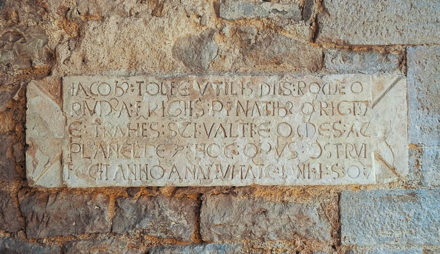
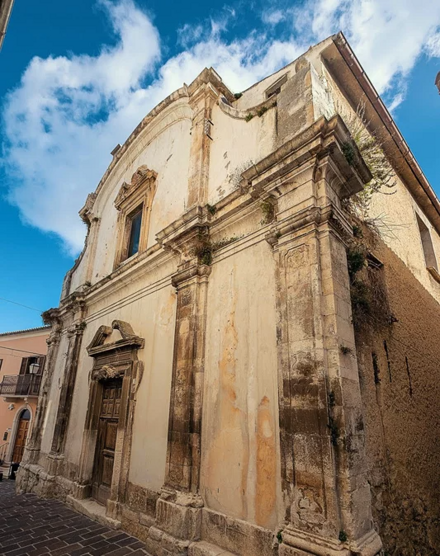
Between essential architecture and rich Baroque interiors, it preserves precious sacred elements and an inscription that tells the Roman echo of the village.
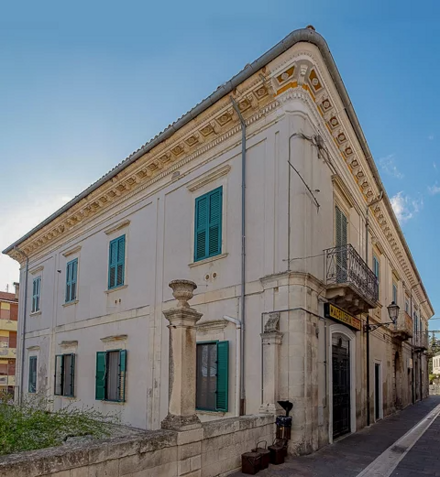
Former office and cinema headquarters, it tells the civil history of the town and pays tribute to the partisan Emidio Cesarone, hero of the Resistance.
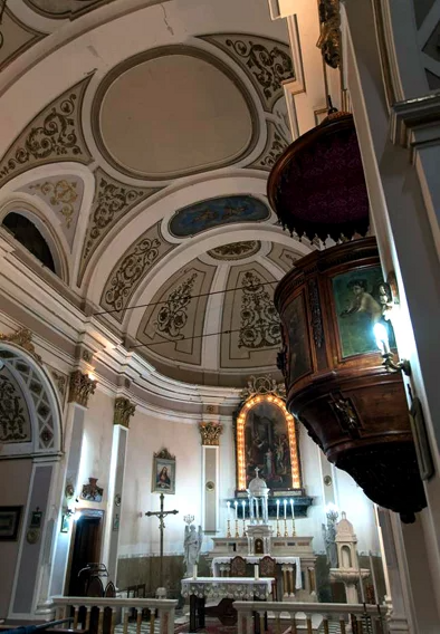
Baroque jewel from 1715, with a Greek cross plan, refined stuccoes, paintings, and a precious pipe organ from the Neapolitan school.

School Palace
Bajocco Palace
Municipality
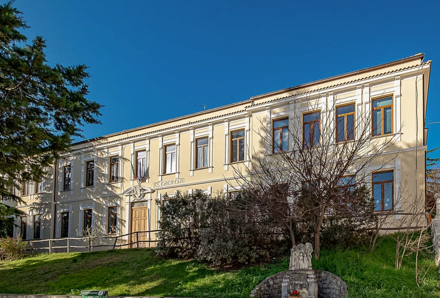
Built in 1921, the educational heart of the community, it also commemorates the figure of Costantino De Renzis, mayor and pillar of the local Resistance.
Built in 1897, it represents an elegant architectural innovation and the history of Agostino Bajocco, an important local politician of the 19th century.
Rebuilt in the 1930s after the 1915 earthquake, it is the administrative heart of the village, a symbol of resilience and rebirth.
Villa Delfinia Olivieri
Church of San Nicola
Fountain of Venus Julia
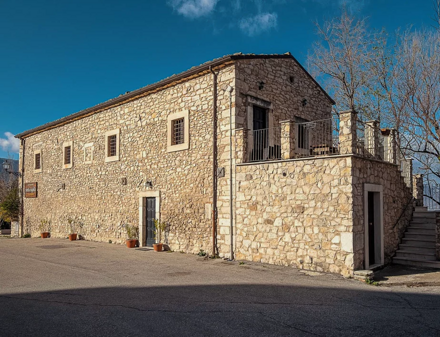
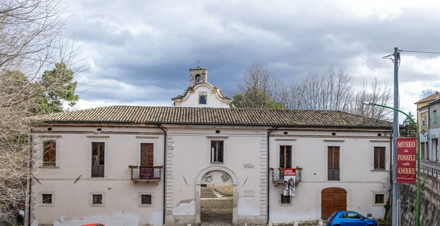
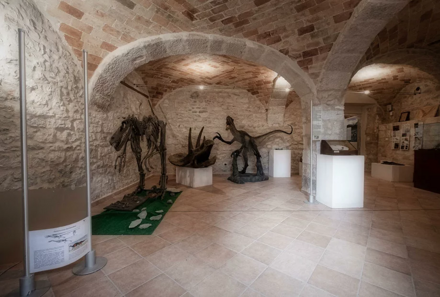
Former 16th-century Augustinian monastery transformed into an aristocratic residence, now a museum dedicated to fossils and ambers.
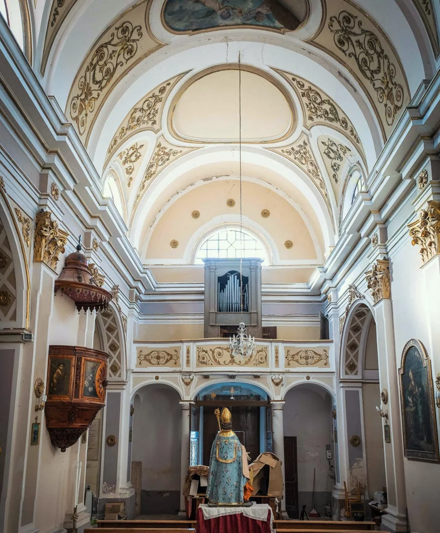
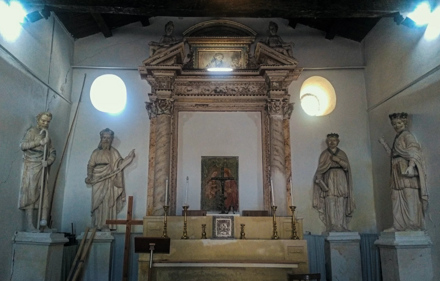
Founded in 1595 as an Augustinian convent, it houses a single-nave church with rich stuccoes and a historic organ by Quirico Gennari (1830).
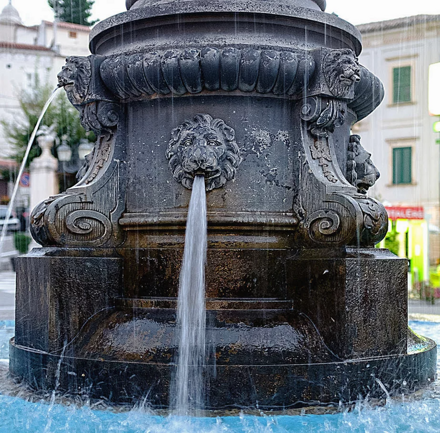
Historic 19th-century cast iron fountain, adorned with elegant statues and linked to the Farnese family who ruled San Valentino from 1583.
Church of the Madonna della Croce
Belvedere della Stella
Museum of Fossils
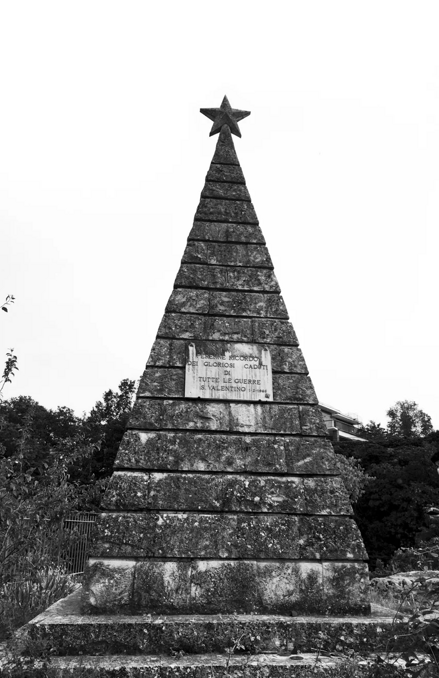
It stands on a rocky mass dominated by the “Pyramid” and the “Star”, stone monuments dedicated to the fallen of the world wars.
Inaugurated in 2004 in Villa Delfina Olivieri, it houses Quaternary fossils and paleoanthropological finds.
Located along the ancient Centurelle-Montesecco sheep track, this 16th-century rural church features frescoes and altars dedicated to St. Peter and St. Paul.
Monuments to the Fallen
San Nicola Belvedere
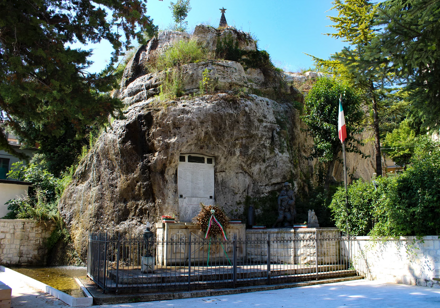
Built in the 1930s and renovated in 1989, the monument in Largo San Nicola pays tribute to the fallen of the two world wars.
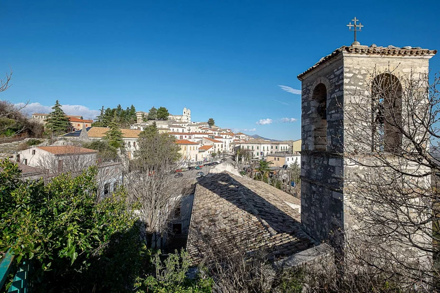
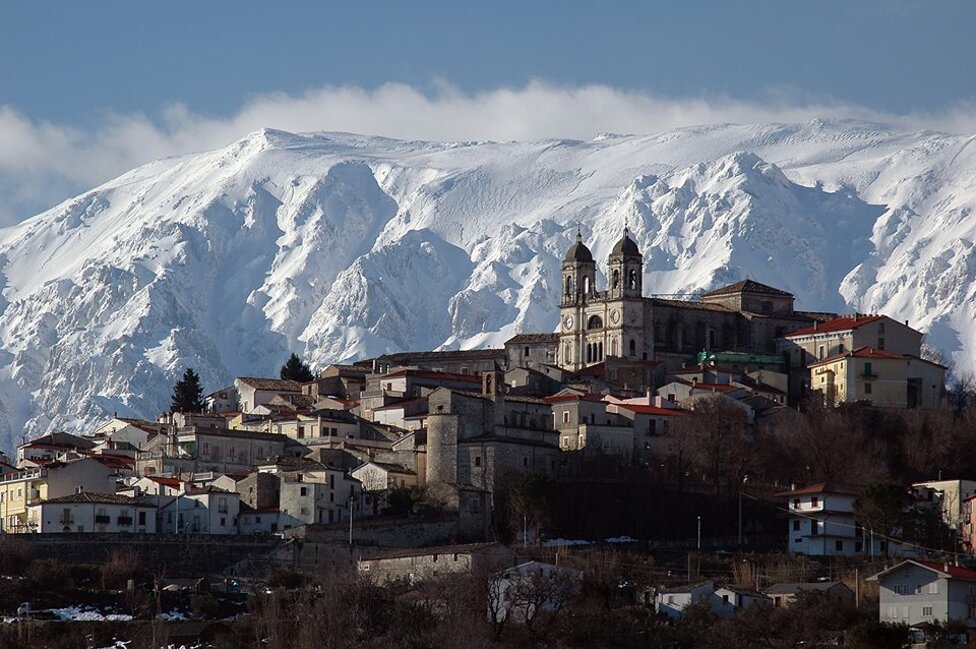
Located near the ancient convent, this viewpoint offers a spectacular view of the village and the peaks of the Majella.
REQUEST MORE INFORMATION
Do you have questions or want to know more?
Write to us, we will help you organize your visit on Valentine's Day