Website created to tell the story of the Municipality of San Valentino

Subscribe to our Newsletter
C.I. SAN VALENTINO IN ABRUZZO CITERIORE
Largo San Nicola
+39 085 922343
info@majambiente.it
Historical Itineraries
Palazzo Farnese
OUR GUIDES
SITEMAP
MAJELLA NATIONAL PARK
MAJELLA NATIONAL PARK
Via Badia 28, Sulmona
+39 0864 25701
info@parcomajella.it
Via Badia 28, Sulmona
+39 0864 25701
info@parcomajella.it
Welcome to the Farnese Palace
@ All Right Reserved 2024 - Website created by Flazio Experience
@ All Right Reserved 2024 - Website created by Flazio Experience
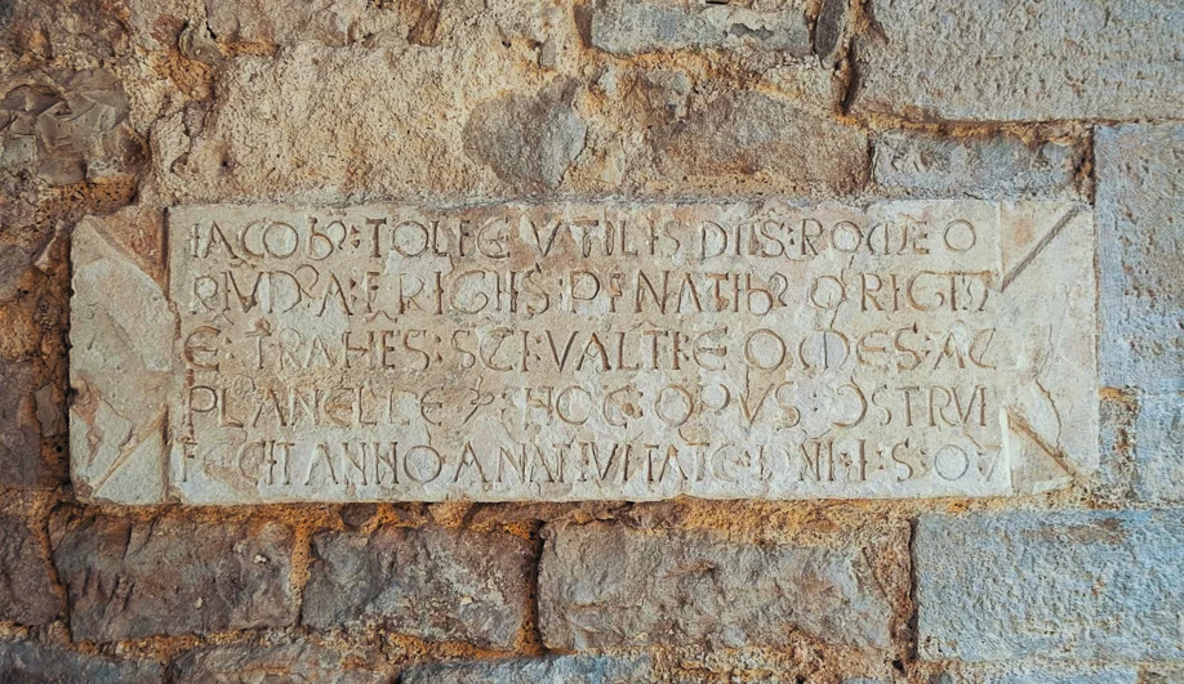
The building includes the remains of an ancient castle, with a tower and fortified walls, which were modified over the years inside by noble constructions mixed with rural elements. The history of San Valentino and the earliest records of the medieval castle are linked to the nearby Abbey of San Clemente a Casauria and can be inferred from the Chronicon Casauriense of the 12th century (1182). The cartularium was written by the monk Giovanni di Berardo, commissioned by Abbot Leonate, and dates the foundation to July 12, 1006, when Abbot Giselberto granted the sons of Lupone, Wido, Sifredo, and Senebaldo a portion of land in the locality of Zappino, also mentioned in the Catalogus baronum (1152). Castrum Petrae and Sanctus Valentinus are the names reported in the Chronicon. In a document from 1140, San Valentino belonged to the Norman Riccardus Turgisii. The Acquaviva, the Orsini, and the Della Tolfa later became its lords, whose descendant Carlo sold the territory to Margherita of Austria, natural daughter of Emperor Charles V, widow of Alessandro de’ Medici and wife of Ottavio Farnese, for 66,000 ducats, on February 3, 1583. The last feudal lords were the Farnese, before the transition in 1734 to the Bourbons, with Elisabetta, wife of Philip V and mother of Charles of Bourbon. In the entrance hall, an epigraph commemorates an intervention on the structure by Giacomo Della Tolfa in 1507.
REQUEST MORE INFORMATION
Do you have questions or want to know more?
Write to us, we will help you organize your visit on Valentine's Day